
By Wendy Rollin
Biblical dramas, values-driven films, and Christian-centered stories are no longer living only on the margins of the entertainment industry. They are finding measurable audiences in theaters, on streaming platforms, and across global media markets.
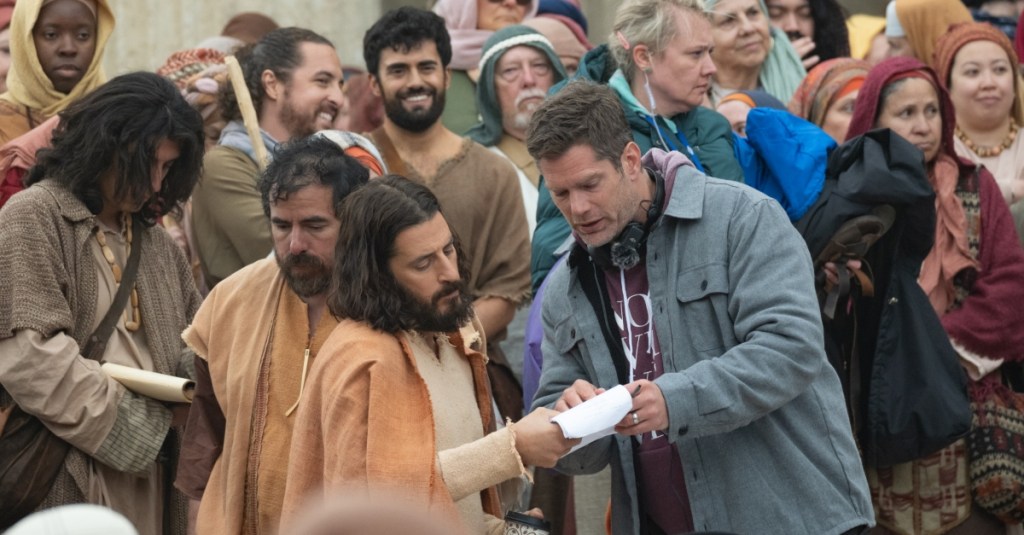
The Chosen has become one of the most visible examples of faith-based entertainment reaching wider audiences through streaming, theatrical events, and international distribution. Photo courtesy of Prime Video. © Amazon Content Services LLC.
For decades, faith-based entertainment occupied a familiar but often limited space. It was supported by church audiences, promoted through Christian networks, and distributed through smaller theatrical runs, DVD sales, or ministry-centered platforms. Many of these projects reached loyal viewers, but they were not always treated as part of the broader entertainment conversation.
That is changing.
Faith-based and values-driven entertainment is gaining wider attention across film, television, streaming, and digital media. Recent projects are being released through major distributors, promoted through national campaigns, and measured by the same standards used across the rest of the industry: box office performance, streaming viewership, global reach, audience engagement, and franchise potential.
The category itself is broad. Faith-based entertainment may include biblical dramas, Christian films, documentaries, inspirational movies, family-centered programming, and stories built around themes of redemption, forgiveness, sacrifice, morality, and spiritual struggle. The Associated Press has noted that the term can be difficult to define because some productions are explicitly religious while others are more broadly values-based or spiritually themed.
A Category With a Larger Audience
One of the clearest examples of this shift is The Chosen, the multi-season series centered on the life of Jesus and His disciples. The series began outside the traditional Hollywood studio system and grew through crowdfunding, app-based distribution, streaming partnerships, theatrical events, and international expansion.
By 2026, Deseret News reported that more than 300 million people in over 175 countries had watched The Chosen, with the series approaching one billion episode views. The Associated Press also reported that since Fathom Entertainment began distributing The Chosen theatrically in 2023, the series had grossed more than $116 million domestically through theatrical distribution.
Those numbers are significant because they show that biblical storytelling is reaching audiences through more than one lane. The Chosen is not simply a television series, a streaming series, or a theatrical event. It has become an example of how faith-centered storytelling can move across platforms and build an audience through multiple points of access.
Its success has also challenged old assumptions about faith-based media. For years, Christian entertainment was often criticized for having strong messages but weaker production quality. More recent projects have shown an increased emphasis on writing, cinematography, music, casting, marketing, and long-form storytelling.
Major Platforms Are Expanding the Category
The growth of The Chosen also showed how important streaming and direct-to-viewer access have become for faith-based entertainment. The series reached audiences through its own app, streaming partnerships, theatrical events, and international distribution, making it part of a larger shift away from traditional release models.
Now, major platforms are moving further into the space.
Prime Video’s House of David, a biblical drama based on the rise of David, became one of the most notable recent examples. Reuters reported that the first season attracted more than 40 million global viewers. The series was produced in partnership with Wonder Project, a faith and values-focused entertainment company founded by Kelly Merryman Hoogstraten, a former Netflix and YouTube executive, and filmmaker Jon Erwin.
Wonder Project has also expanded beyond a single series. Reuters reported that the company planned a faith-focused channel through Amazon Prime Video in the United States, with the second season of House of David included in the service.
That kind of distribution matters. Faith-based entertainment is no longer dependent only on church screenings, DVD sales, or limited releases. Today, these projects can reach audiences through major streamers, subscription add-ons, direct-to-viewer apps, theatrical event partners, social media campaigns, and digital rentals.
The result is a more visible and measurable audience.
Box Office Results Have Strengthened the Case

Faith-based films and series are gaining wider visibility through theatrical releases, streaming platforms, and audience-supported distribution. Image illustration by Held by Faith.
Theatrical releases have also helped bring faith-based entertainment into the larger industry conversation.
Sound of Freedom, released by Angel Studios in 2023, earned more than $250 million worldwide, according to Box Office Mojo’s 2023 worldwide box office data. Its success drew national attention because it was an independent release competing in a marketplace often dominated by major studio franchises.
Other films have also demonstrated the commercial strength of the category. Jesus Revolution, released by Lionsgate in 2023, earned more than $54 million worldwide and brought the story of the Jesus Movement of the late 1960s and early 1970s to a national theatrical audience.
In 2025, Angel Studios’ animated film The King of Kings added another example. The Numbers listed the film’s worldwide box office at more than $83 million, including more than $60 million domestically and an opening weekend of more than $19 million.
For studios and distributors, these numbers are not just religious-interest data. They are market data. They show that audiences are buying tickets, streaming episodes, downloading apps, and sharing content connected to biblical, Christian, inspirational, and values-driven stories.
Why the Shift Is Happening Now
Several factors appear to be contributing to the growth.
One is audience demand. Viewers who want faith-centered, family-oriented, or values-driven stories are becoming easier to measure through ticket sales, streaming numbers, app downloads, and online engagement. That data gives distributors a clearer picture of what this audience is willing to support.
Another factor is production quality. Newer faith-centered projects often include larger budgets, stronger visual design, experienced actors, better marketing, and more ambitious storytelling than many earlier entries in the genre. The Associated Press reported that studios are paying closer attention to faith-based film and television in part because of the success of The Chosen and the financial traction of recent projects.
Distribution has also changed. In the past, a faith-based film might depend heavily on church partnerships or a limited theatrical window. Today, a project can build an audience through crowdfunding, release episodes through an app, sell theatrical event tickets, stream globally, and continue reaching viewers long after its initial release.
Family viewing is another part of the appeal. Many parents, churches, and values-conscious viewers are looking for entertainment that aligns more closely with their convictions. That does not mean every project in the category is explicitly Christian, but it does help explain why spiritually themed and family-centered content is receiving more attention from studios and streamers.
Industry Impact for Christian Media
For Christian media, the growth of faith-based entertainment is important because it shows that stories involving Scripture, morality, redemption, spiritual struggle, and religious identity are being developed and distributed at a larger scale than in many previous years.
The trend does not mean every faith-based project will succeed. It also does not mean every production labeled as faith-based will share the same theology, purpose, or audience. Some are directly biblical. Others are inspirational, historical, family-oriented, or broadly values-driven.
Still, the broader movement is worth noting. Faith-based entertainment is no longer limited to one lane of the media world. It is appearing in theaters, on streaming platforms, in international markets, and in conversations about what audiences are asking to see.
Faith-based entertainment is not moving into the mainstream by leaving its core audience behind. It is moving forward because that audience has become more visible.
Viewers are buying tickets. They are streaming series. They are supporting independent studios. They are sharing content online. In doing so, they are helping create a larger market for stories shaped by faith, Scripture, family, redemption, and hope.
Sources
Associated Press — “Faith-based entertainment sees a revival in Hollywood. Defining what it is can be a challenge.”
Deseret News — “‘The Chosen’ effect: How the biblical drama opened the door for a new era in faith entertainment.”
Reuters — “Amazon Prime Video to have Wonder Project’s faith-focused channel in US this fall.”
Box Office Mojo — worldwide box office data for Sound of Freedom and Jesus Revolution.
The Numbers — box office and financial data for The King of Kings.


Leave a comment