
Written by Wendy Rollin
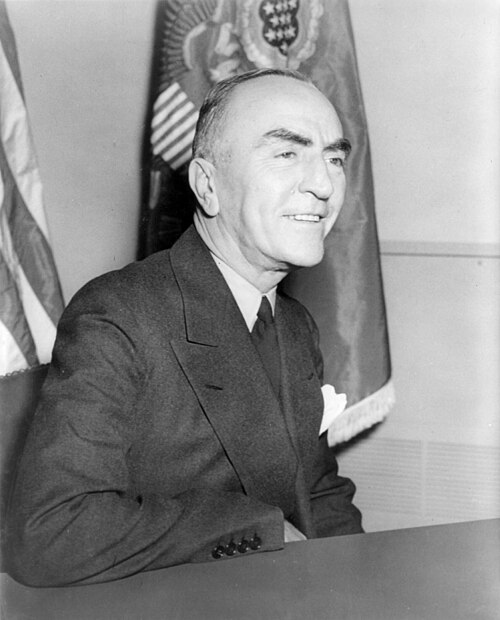
Eddie Rickenbacker in December 1942, shortly after his rescue from the Pacific. U.S. Army Signal Corps photograph, public domain.
Eight men entered the Pacific in three small life rafts. Twenty-one days later, only seven would come through.
There was nothing beneath them but the ocean.
No land. No certainty that search crews knew where to look. No guarantee that their rafts would survive another night.
Yet amid hunger, thirst, scorching heat, and the growing possibility of death, Eddie Rickenbacker and the men stranded beside him began to pray.
A Mission That Went Terribly Wrong
By 1942, Eddie Rickenbacker was already an American legend. A former race-car driver, he had become the leading American fighter ace of World War I and later served as president of Eastern Air Lines.
That fall, Secretary of War Henry Stimson asked Rickenbacker to evaluate morale and aerial operations in the Pacific combat theater.
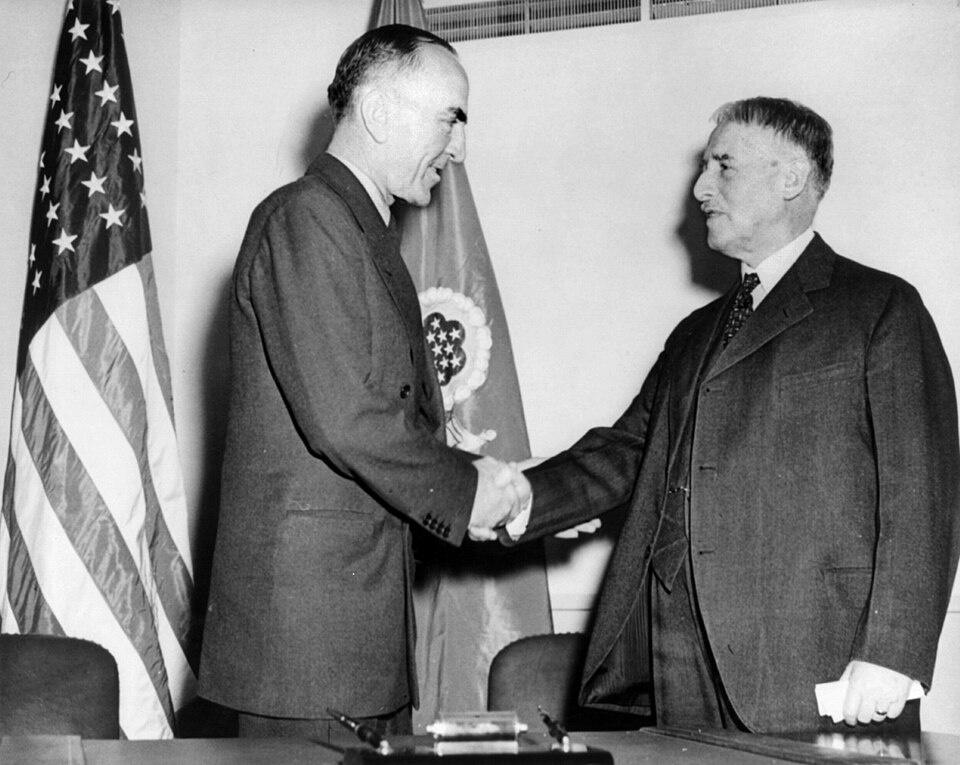
Eddie Rickenbacker with Secretary of War Henry Stimson in 1942, before Rickenbacker’s mission to the Pacific. U.S. Army Signal Corps photograph, public domain.
On October 21, 1942, Rickenbacker and seven other men departed Hawaii aboard a B-17 bound for Canton Island. The crew was unable to locate the small island, and the aircraft eventually ran out of fuel.
They were forced to bring the plane down in the Pacific Ocean.
The men escaped into three overcrowded rubber rafts, but most of their emergency supplies disappeared with the aircraft. They had only limited food and water—and no way of knowing whether anyone would find them.
The sun burned their exposed skin. Salt water entered their wounds. Their mouths developed sores, and their bodies weakened.
At night, the temperature dropped, leaving them cold and exhausted as they pressed together for warmth.
A New Testament in a Life Raft
One of the men, Lieutenant James Whittaker, had brought a New Testament.
As their situation became more desperate, the men began pulling their rafts together each morning and evening. They read Scripture aloud and prayed.
Rickenbacker later admitted that he had not considered himself deeply religious before the ordeal, although he had always been conscious of God.
Certain passages began speaking directly to their suffering. Psalm 23 became especially meaningful. They also returned repeatedly to Jesus’ words in Matthew chapter 6:
“Take therefore no thought for the morrow.”
Surrounded by an ocean they could not drink and unable to provide enough food for themselves, the men read Christ’s words about trusting their heavenly Father for what they needed.
Prayer did not immediately remove their suffering. It did not instantly bring a rescue plane into view.
But it gave them somewhere to turn when their own strength could no longer carry them.
Provision From Above
By the eighth day, the men were starving.
That morning, Captain William Cherry read from the book of Matthew during their prayer time.
Later, as Rickenbacker rested with his hat pulled partly over his face, a gull descended and landed directly on his head.
He remained still, slowly reached upward, and caught it.
The men divided the bird for food and used part of it as bait, helping them begin catching fish. Rickenbacker later described their success in obtaining food as miraculous.
The arrival of the gull became one of the best-known parts of the story, but the deeper testimony had already begun forming in the rafts.
Men accustomed to relying on skill, knowledge, and human strength found themselves powerless. There was no engine to repair, enemy to defeat, or course they could confidently chart.
They did what they could—and entrusted what they could not control to God.
As the ordeal continued, the men prayed, sang hymns, and spoke honestly about life, death, mistakes, and eternity.
Rickenbacker would later write that he never lost faith during those twenty-one days and believed their suffering had a purpose.
Faith Did Not Remove Every Loss
Their prayers did not spare them from every sorrow.
Sergeant Alexander Kaczmarczyk was already seriously ill when the aircraft went down. After drinking seawater, his condition worsened. Despite the efforts of the other men, he died before rescue arrived.
The survivors were forced to face grief while still struggling to remain alive themselves.
Their story does not teach that faith prevents suffering or guarantees that every prayer will be answered in the way people hope.
It shows that faith can remain present even when suffering continues.
The men still endured hunger, dehydration, fear, physical pain, and loss. Prayer did not make the Pacific less dangerous.
It helped them continue through it.
Seven Came Through
After three weeks at sea, a Navy pilot finally spotted Captain Cherry near the Ellice Islands on November 13.
Rickenbacker and the remaining men were found and rescued in the days that followed. They were severely weakened by starvation, dehydration, exposure, and sunburn.
Rickenbacker later told the story in his book Seven Came Through.
His reliance on prayer did not end when he stepped out of the raft. In 1945, he wrote publicly about his faith, the near-death experiences he had survived, and his belief that God had spared him because there was still work for him to do.
He did not claim that he survived because he was more important or deserving than those who died. Instead, he believed that the life he had been given carried a responsibility to serve others.
Eddie Rickenbacker entered the Pacific known for courage, achievement, and human strength.
He emerged with another testimony.
When those strengths reached their limit, prayer gave the men hope—and God had not abandoned them.
In the middle of the Pacific, with no land in sight, a small New Testament became more than something one man had packed for the journey.
It became a reminder that even when people cannot see rescue coming, God is still near.
“But seek ye first the kingdom of God, and his righteousness; and all these things shall be added unto you.” — Matthew 6:33, KJV
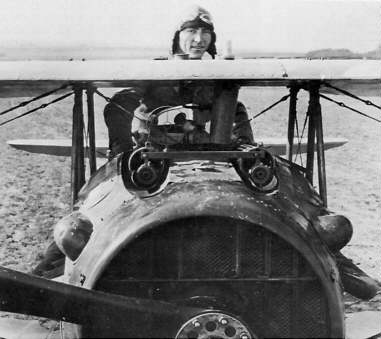
Captain Eddie Rickenbacker in the cockpit of his SPAD aircraft during World War I. American official military photograph, public domain.
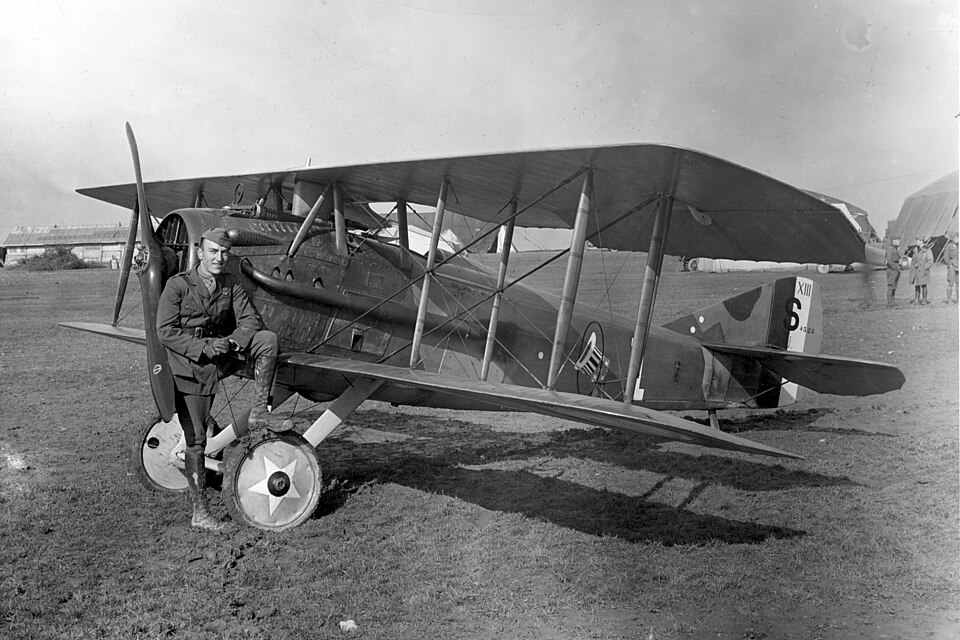
Captain Eddie Rickenbacker of the 94th Aero Squadron with a SPAD XIII fighter aircraft during World War I. U.S. Army Air Service photograph, public domain.

Workers display a life-raft model associated with the rescue of Eddie Rickenbacker and his crew. Office of War Information photograph, public domain.
Sources
- Eddie Rickenbacker, Seven Came Through
- National Museum of the United States Air Force
- Air Mobility Command History Office
- Eddie Rickenbacker’s 1945 essay published by Guideposts
 Wendy Rollin
Leave a comment