
Written by Wendy Rollin
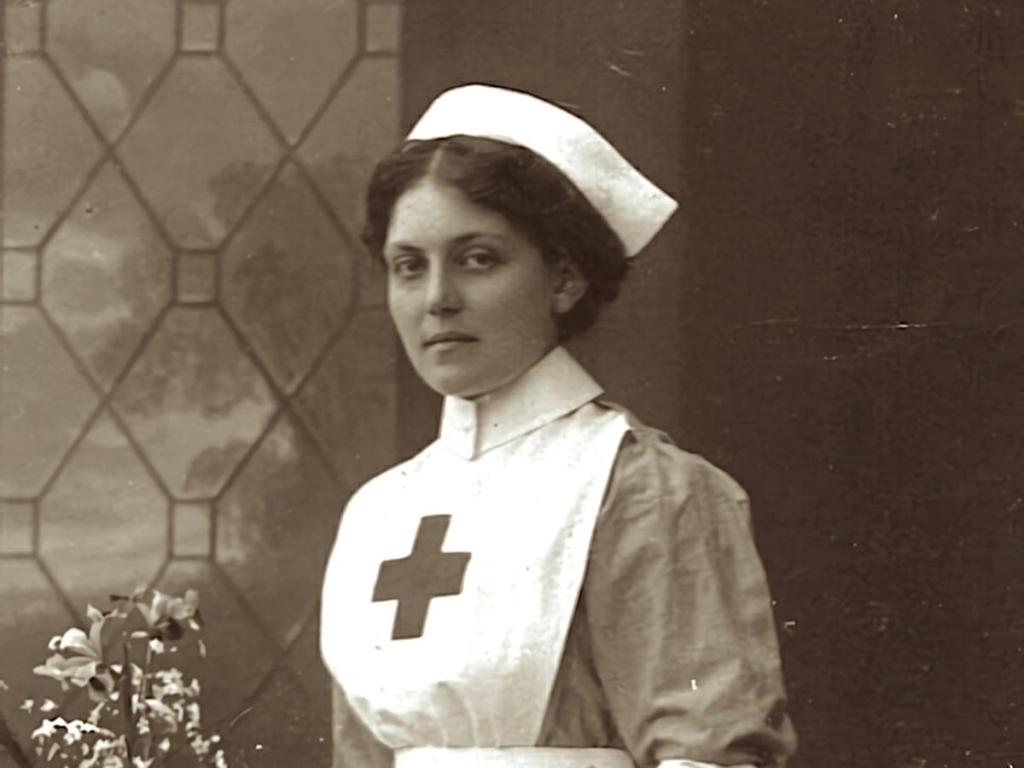
Violet Jessop pictured in her Voluntary Aid Detachment nursing uniform during World War I, approximately 1915–1917. Public-domain photograph via Wikimedia Commons.
Violet Jessop survived circumstances that could have ended her life more than once. She was aboard one ship during a serious collision and escaped two others as they sank beneath the water.
Yet when Violet reflected on what had carried her through, she did not speak only of courage, determination, or good fortune. She spoke of faith in divine intervention.
Her story is remembered because of the disasters she survived. But beneath the name “Miss Unsinkable” was a woman who carried prayer into uncertainty and believed that God had not abandoned her when everything around her was falling apart.
A Faith She Carried With Her
Violet Constance Jessop was born in Argentina in 1887 to Irish Catholic parents. As a child, she contracted tuberculosis and was reportedly given little hope of surviving. Despite the prognosis, she recovered.
After her father died and her mother’s health declined, Violet began working aboard passenger ships to help support her family. She had attended convent school, was committed to prayer, and carried her faith into the demanding life of a ship stewardess.
In 1911, Violet was serving aboard the Olympic when it collided with the British warship HMS Hawke. The Olympic was badly damaged but remained afloat and returned to port.
Violet survived unharmed.
She could have left the sea behind, but she continued working aboard ships.
A Prayer Before the Titanic Struck
In April 1912, Violet joined the crew of the Titanic as a stewardess.
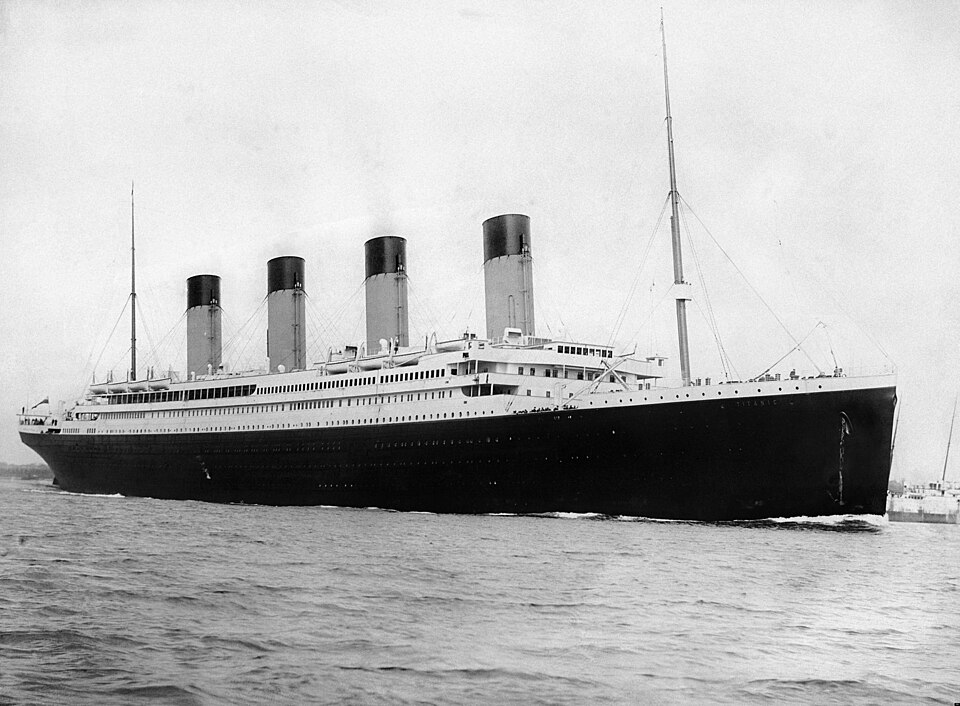
RMS Titanic departing Southampton on April 10, 1912. Photograph by F. G. O. Stuart. Public domain via Wikimedia Commons.
On the night of April 14, Violet later recalled reading a translated prayer that an elderly Irish woman had given her. The prayer asked for protection from fire and water. Violet also encouraged her roommate to read it.
Not long afterward, the Titanic struck an iceberg.
The prayer did not prevent the disaster. The ship still sank, and more than 1,500 people lost their lives.
Faith did not spare Violet from catastrophe. It gave her something to hold onto within it.
Violet was ordered onto the deck, where she helped reassure passengers who were uncertain about what was happening. She was eventually directed into Lifeboat 16.
She later recalled that an officer placed a baby in her arms as the lifeboat was lowered into the dark water. Violet held the child until the survivors were rescued by the Carpathia several hours later. Her account of being handed the baby is preserved among letters held by Royal Museums Greenwich.
Violet had survived one of the most devastating maritime disasters in history.
Still, she returned to sea.
The Prayer Book She Would Not Leave Behind
During World War I, Violet served with the British Red Cross aboard the Britannic, which had been converted into a hospital ship.
On the morning of November 21, 1916, Violet later recalled attending Mass before sitting down to breakfast. Soon afterward, an explosion tore through the ship. The Britannic had struck a German mine and began sinking rapidly.
As she prepared to abandon the ship, Violet returned to her cabin for several treasured possessions. Among them was her prayer book.
With the ship sinking beneath her, Violet reached for something connected to her faith.
She did not know what would happen next, but she did not want to face it without the prayers that had accompanied her.
Violet entered a lifeboat, but the boat was pulled dangerously close to the ship’s still-turning propellers. She jumped into the water to escape and was drawn beneath the surface, striking her head.
She survived. Years later, a doctor reportedly discovered that she had sustained a skull fracture. Violet described her service aboard the Britannic and her escape in an oral-history recording now preserved by the Imperial War Museums.
More Than Luck
Violet Jessop became known as “Miss Unsinkable.” Her survival has often been described as extraordinary luck.
But Violet did not explain her life through luck alone.
Reflecting on the strength that had carried her through, she spoke of:
“Just the will to live. And a huge chunk of faith in divine intervention.”
Those words reveal the deeper meaning of her story.
Violet’s faith did not give her a life without danger. It did not stop the collision involving the Olympic, the iceberg from tearing into the Titanic, or the mine from sinking the Britannic.
Her faith gave her something steady when the world beneath her was no longer secure.
She prayed before the Titanic struck. She reached for her prayer book as the Britannic sank. She endured fear and injury without allowing those experiences to claim the rest of her life.
Violet eventually returned to maritime service and continued working aboard ships until her retirement in 1950. She had faced death more than once, yet she continued living with courage, purpose, and faith.
Passing Through the Waters
Violet’s story calls to mind the words of Isaiah:
“When thou passest through the waters, I will be with thee.” — Isaiah 43:2, KJV
This verse is not recorded as Violet’s personal Scripture, but its message reflects the faith at the heart of her account.
God’s presence does not always mean that the storm will be prevented. Sometimes it means that we are not abandoned while passing through it.
Violet Jessop’s story is remembered because she survived one collision and two sinkings. But survival alone does not explain why her life continues to speak to us.
She carried prayer into uncertainty. She held onto faith while ships were sinking around her. Afterward, she refused to surrender the rest of her life to fear.
Violet passed through the waters more than once. Each time, she emerged carrying the faith she had taken with her.
Her survival was extraordinary.
Her belief in divine intervention is what makes her story more than an account of survival. It makes it a story of faith.
Sources
- Jessop, Violet. Titanic Survivor: The Newly Discovered Memoirs of Violet Jessop Who Survived Both the Titanic and Britannic Disasters. Edited by John Maxtone-Graham, Sheridan House, 1997.
- Imperial War Museums — Violet Constance Jessop Oral History
A recorded interview in which Jessop discusses her service aboard the Titanic and Britannic, including her escape from the sinking hospital ship. - Royal Museums Greenwich — Papers Concerning Violet Jessop
Archival material including a 1958 letter from Jessop and correspondence concerning her memoirs. - Royal Museums Greenwich — Letters from Survivors of the Titanic
Includes Jessop’s account of being handed a baby to take into the lifeboat. - National Geographic — “She Survived the Titanic—but It Wasn’t the Only Time”
A historical feature drawing from Jessop’s memoir and discussing her prayer book, faith, and belief in divine intervention. - Encyclopedia Titanica — Violet Constance Jessop
Biographical and crew information concerning Jessop’s service aboard the Olympic, Titanic, and Britannic.
Image Credits
- Violet Jessop in Voluntary Aid Detachment Uniform
Anonymous photographer, approximately 1915–1917. Public domain via Wikimedia Commons. - RMS Titanic Departing Southampton
Photograph by F. G. O. Stuart, April 10, 1912. Public domain via Wikimedia Commons.


Leave a Reply